How I’m Planning to Travel Full-Time on $12,000 a Year
My real budget for a full year abroad on $12,000: Albania, Georgia and Southeast Asia, the three levers that make it work, and where the plan could break.
My flight leaves February 21.
One way, Houston to Tirana. It cost $344 and I paid for it with miles, so the cash number was zero.
My first 32 nights are booked too. Eighteen in Tirana, fourteen in Durres. Total cash: $381.08, which works out to about $11.91 a night.
Those numbers are real and I’ll explain exactly how they got that low, including the part where they’re not quite as impressive as they look.
All of it fits inside a budget I’ve given myself for the year: $12,000. Not $12,000 plus flights. Not $12,000 plus insurance, plus visas, plus the thing that goes wrong in month seven. Twelve thousand dollars for all of it.
Let me show you the math, because the math is the entire article.
It’s an annual budget, not a monthly one
This distinction matters more than anything else here, and it’s the thing most “live abroad on $1,000 a month” content gets wrong.
I am not trying to spend $1,000 every month. I’m trying to spend $12,000 over twelve months, which is a completely different problem.
Some months will run $1,300. Some will run $700. That’s not a budget failing, that’s the design. A month in Albania and a month in Vietnam are not the same expense, and pretending they should be would mean either overspending in the cheap places or being miserable in the expensive ones.
I’m tracking every dollar. The number that matters is the one at the end.
What “everything” includes
Since the whole claim rests on this, here’s what has to fit inside $12,000:
Rent. Food. Local transport. Internet and phone. Health insurance. Every flight between countries. Visa costs. Entertainment. Replacing gear when it dies. Whatever emergency shows up, because one will.
That’s the number. If I need a flight in August, it comes out of the same $12,000 as my groceries in August. Nothing gets quietly moved off the books into a separate pile so the headline number looks better.
The route
Roughly five to six months in Albania, starting in Tirana.
A year is too long there. Americans get 365 visa-free days in Albania with no application and no income requirement, which is one of the most generous policies in the world, but the full year isn’t the goal. Five or six months is enough to have a life there without the place turning into a rut.
Then Georgia for two or three months.
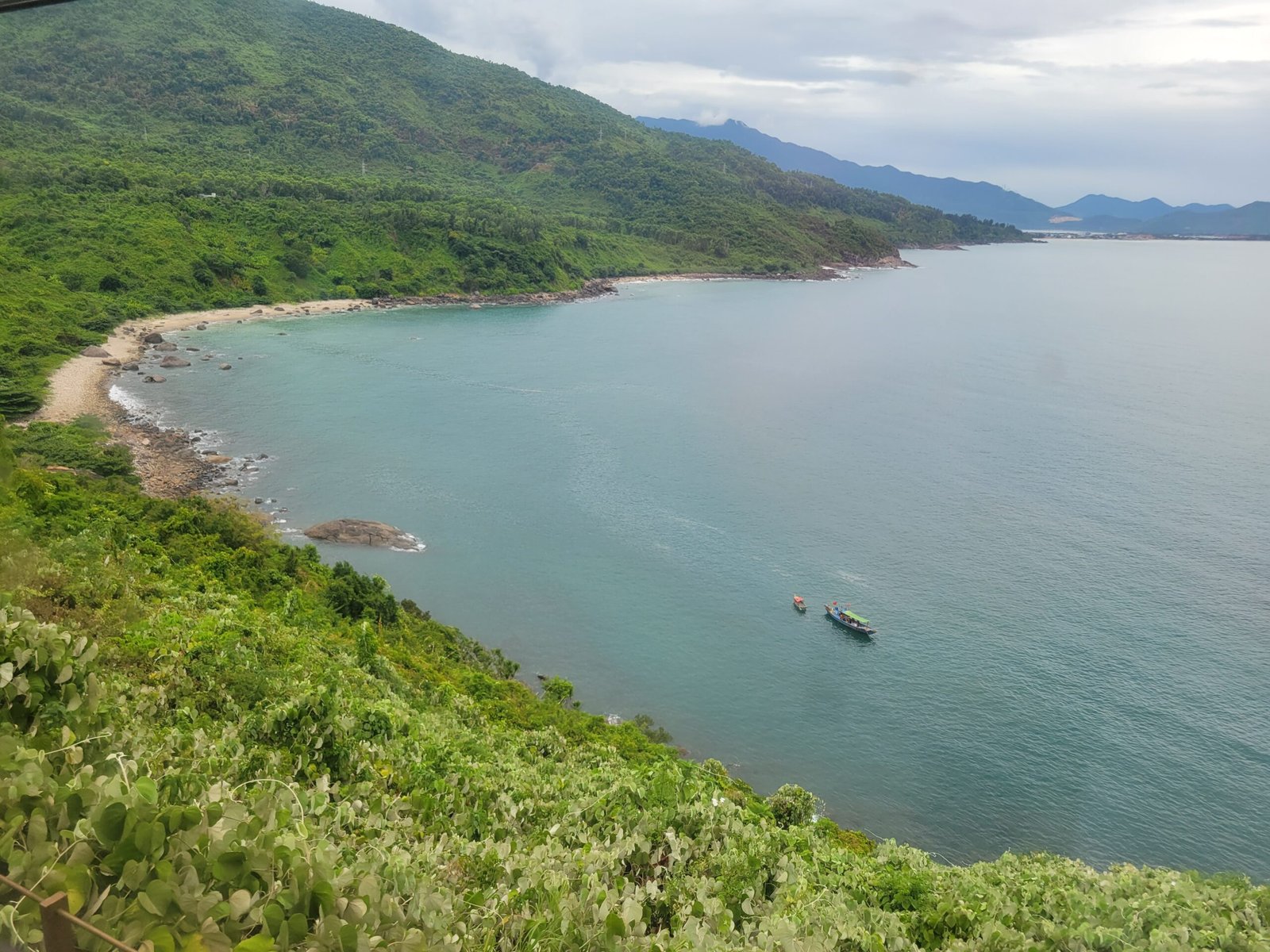
Then Southeast Asia, probably Vietnam or Thailand, and that’s where the budget gets a lot easier. In Da Nang I can likely live directly on the beach for $400 a month. There is no version of Tirana where that sentence is true.
After that I honestly don’t know. Philippines, Malaysia, or back to Albania. I’m not going to invent certainty I don’t have about month eleven.
The order isn’t random, either. It’s the first of three things that make $12,000 work.
Lever one: the expensive part comes first
Albania is the most expensive leg of this year.
That sounds strange, since Tirana is one of the cheaper capitals in Europe. But cheap in Europe is not cheap in Southeast Asia. A one-bedroom in central Tirana averages around $590 to $620. Outside the center it drops toward $270 to $400, which is where I’ll be living unless something changes my mind.
Southeast Asia pulls the average down hard. Four months at Da Nang prices does more for the annual number than any amount of discipline in Albania.
So the year isn’t twelve identical months. It’s a few expensive ones, subsidized by several cheap ones, which is only possible because I’m not tied to one place. Being able to move isn’t just a perk here. It’s the main thing making the math work.

The costs that follow me everywhere
Before I sleep or eat anywhere, some things bill me every month regardless of which country I’m standing in.
| Recurring | Monthly |
| Health insurance | ~$45 |
| Tello (US number) | ~$8 |
| Local SIM | ~$10 |
| Google One | ~$8.50 |
| Spotify | ~$8.50 |
| Epidemic Sound (annual billing) | ~$10 |
| Domains | ~$3 |
| Budgeted | $100 |
Those add up to about $93. I budget $100.
The extra seven dollars is deliberate. It absorbs taxes, foreign transaction quirks, and the price increases that every subscription service hands you eventually. If it comes in under, great. If Spotify raises prices in month four, I’ve already paid for it and nothing has to move.
That’s $1,200 for the year, or 10% of my entire budget, gone before I’ve paid a single night of rent.
Worth seeing written down, because this is the category that quietly eats people. None of these feel like anything. Eight dollars here, ten dollars there. Together they’re three months of beachfront rent in Da Nang.
The insurance number is real. I’ve already quoted it. The plan, the phone setup and the cards are all on my Resources page.
The phone line is two separate problems. Tello keeps my US number alive for about $8 a month. That matters more than it sounds. Banks, two-factor codes, and the occasional call from home all still go to that number, and I’m not rebuilding all of that from Tirana.
Data is the other problem, and for that I’m using local eSIMs. No physical SIM to swap, no hunting for a phone shop at the airport. Buy it, scan it, and the phone has data when the plane lands. This is where I’m getting mine:
That’s an affiliate link. If you buy through it, I get a small cut at no extra cost to you.
How I count, and why the $0 hotel isn’t really free
My first two bookings look like this:
| Booking | Charged | Rewards earned |
| Tirana, 18 nights | $381.08 | 5% ($19.05) |
| Durres, 14 nights | $0 (last $28.02 paid with points) | 10% ($2.80) |
Fourteen nights in Durres for zero dollars. The booking charged $28.02, and I wiped that out with points, so nothing left my bank account. That is a real number, and it is also the kind of number that makes these articles useless, so here’s the full accounting.
Tirana came in that low because I applied a $250 promotion. Durres came in that low because I applied a $300 annual travel credit from my card (the Capital One Venture X, that’s my referral link), then covered what was left with points. All of that genuinely reduced what I paid, so those are honest numbers.
But that $300 credit isn’t free. It comes attached to a $395 annual fee. If I leave the fee out of my budget and keep the credit in it, I’m doing the exact thing I find dishonest when other people do it: moving a cost off the books so the headline number looks better. So the fee goes in the budget too, and the credit offsets most of it, and Durres cost what it cost.
The rewards column works differently. Those miles are an asset, not a discount. If I counted the $2.80 as a savings today and then spent those miles on a flight later and recorded that flight as free, I’d be counting the same money twice.
So the rule for the whole year is simple: I record what actually leaves my bank account. Redemptions get recorded at zero, because zero dollars left my account. Miles get tracked separately, as a balance, not as income.
Is it boring? Extremely. It’s also the only way I know to end up with a number you can actually trust after twelve months.
Lever two: miles
The Tirana flight is bought and it cost me nothing in cash.
That’s not a small thing when flights are the line item most likely to blow up a low annual budget. A single unplanned $600 flight is 5% of my year.
The miles I have left go to the long hops, Tbilisi to Southeast Asia in particular. That’s potentially several hundred dollars of flights that never touch the budget. The intra-region flights in Southeast Asia are cheap enough to pay cash for.
I’m not a points nerd, and I’m not about to start a points blog. But here, points are doing a lot of the heavy lifting.
Lever three: work exchange
I plan to spend at least two of the twelve months on Worldpackers or Workaway. Possibly three or four.
The trade is straightforward: you work some hours, you get accommodation and usually food. For those months my two largest expenses drop close to zero.
I’ve done this twice already, in Costa Rica and Panama, so this isn’t a line I’m putting in a budget based on a YouTube video. I know what the work actually feels like and I know what it’s worth.
Two months is worth roughly $1,000 to $1,400 against the annual total. That’s not a rounding error, it’s most of my emergency cushion. Four months would change the shape of the entire year.
Free guide · Work a Season
Rather earn while you save?
Before going abroad I worked seasons at Yellowstone and Alta with housing included. Here is how.
The model
Here’s how the year adds up as currently planned.
| Annual | |
| Recurring (insurance, phone, subscriptions, domains) | $1,200 |
| Albania, ~5.5 months (one on work exchange) | $3,625 |
| Georgia, ~2.5 months | $1,750 |
| Southeast Asia, ~4 months (one on work exchange) | $2,150 |
| Flights between countries (after miles) | $750 |
| Visas and admin | $200 |
| Card annual fee (offset by the $300 credit) | $395 |
| Subtotal | $10,070 |
| Remaining for emergencies and overruns | $1,930 |
That last line is the one I care about most.
If the plan required all $12,000 to go to living expenses, it wouldn’t be a plan, it’d be a dare. The buffer exists because of the three levers, not because I’m going to be disciplined. I know myself. The structure has to do the work.
Where this breaks
Rent in Albania is my shakiest assumption. If I land, get tired, and take the first furnished place an agent shows an American in Blloku, I’m out by $200 a month and the buffer starts evaporating in month one.
The deals are the other one. My first 32 nights came in cheap partly because I stacked a promotion and a travel credit that I can’t stack again this year. If I quietly assume every booking goes that well, I’m lying to myself with a spreadsheet.
And there’s whatever I haven’t thought of, which by definition I can’t list.
If the year proves $12,000 isn’t enough for a life I actually want, I’ll say so and publish the corrected number. The $12,000 is a target, not scripture. I’d rather find out I was wrong and show my work than protect a number I wrote in Texas in 2026.
What I’m actually buying
I don’t think about $12,000 in terms of what it gets me. I think about what it stops requiring from me.
If my life costs $1,000 a month and I make $2,000, half of everything is free. If I make $3,000, the gap gets ridiculous. If I have a bad month and pull $1,200, I’m uncomfortable, but I’m not fucked.
That’s the whole point. Low expenses don’t earn me anything. They make every dollar I do earn count for more, and they buy the only thing I actually want, which is time to build something without a countdown running.
I’m not trying to build the cheapest life possible. Just the freest one I can afford.
The cards and accounts that keep fees out of this budget are on my Money page. I’m publishing every real month once I land. Drop your email below if you want to follow along. The day-to-day goes on Instagram.

Thanks for reading
Get the next one on the 1st.
I’m Dylan. One honest email a month: what it cost, what worked, and the places worth your time. You also get my free field guide, First 24 Hours in a New Country.
Free. Unsubscribe in one click.